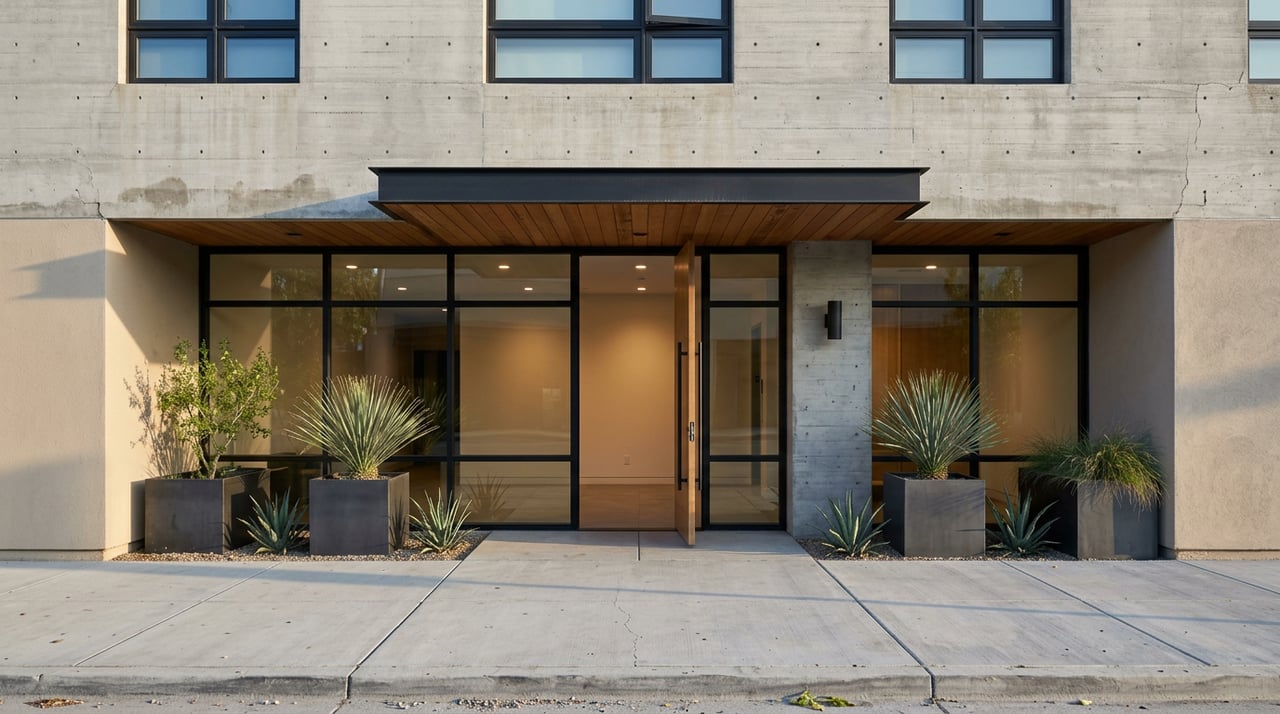
The Arts District Is Turning Into A Neighborhood This Summer
July 23, 2026
July 23, 2026
For most of the last decade, the 18b Arts District was a place people drove into on the first Friday of the month and left before midnight. Summer 2026 is the season that stops being true. The parking policy, the residential pipeline, and even the First Friday footprint are all being rewritten around a simple assumption the city was not making three years ago: enough people now live here to plan for.
That is the shift worth paying attention to if you already own a loft south of Charleston, rent near Casino Center, or just spend most Saturdays walking Main Street. The updates below are not a roundup. They are a single change showing up in four places.
The headline number is the new five-story garage. A new 500-space parking garage is coming to the Arts District at 1421 S. Casino Center Blvd., a $25 million structure set to open at 9:30 a.m. Sept. 29, with rates of $3 per hour and a $15 daily maximum. The building will also include leasable retail space and a large mural.
Put that against the current inventory. The Arts District currently has 480 on-street parking spaces and 874 spaces in parking lots. A single new garage is adding roughly a third again on top of what exists today, which is a scale of intervention you do not make for occasional visitors. You make it because the daily population is going up.
The pricing story tells the same thing. In October 2025, the city raised street parking rates by $1 per hour, bringing fees in the area to $2 to $4 per hour depending on location, and a privately owned lot, Art Square, converted from free to $4 per hour in November, one of the last remaining free lots in the immediate area. A series of additional parking policy changes are set to take effect Oct. 1.
If you live here, the practical read is this: the era of drifting in and finding something free on a side street is over. The garage at Casino Center is now the anchor, and the ripple through October is going to reset habits for every regular.
The reason the city is building for permanent traffic is that the buildings holding permanent residents are finally getting delivered.
Southern Land Co. announced that it started pre-leasing at both its new rental project in the Arts District and its new mid-rise complex in Symphony Park, with first move-ins at both properties targeted for the following month. The developer also said it is on track to start pre-leasing for its new tower in Symphony Park, the first residential high-rise to open in Las Vegas in more than 15 years, this summer. All told, the firm is opening nearly 900 units total across these projects.
That is one developer. The council-level activity says the pattern is broader. The City Council signed off on a six-story apartment building at 7th Street and Gass Avenue, squeezed between the 18b Arts District and the historic Huntridge Theatre, with active uses on the ground floor and an underground parking garage aimed at keeping tenant cars off nearby residential streets. City staff had earlier urged denial, warning the proposal would "overbuild" the parcel, but supporters said revised plans were scaled to reduce the building's bulk.
And the density is not theoretical. Gemma is adding hundreds of units to the area and recently dropped 337 new apartments into the Arts District.
Stack them:
That is the fastest concentration of new rooftops the neighborhood has ever absorbed at once. Staff anxiety over density and parking fits into a larger, long-running argument about how aggressively to grow inside the 18b Arts District, where several sizable apartment developments have been approved or are underway, a wave that local reporting says is reshaping foot traffic patterns, fueling new retail demand, and stirring debate over what kind of Arts District residents actually want.
The debate is real. So is the demand it is producing.
The neighborhood also picked up its first serious non-gaming hospitality anchor in the same window. AC Las Vegas Symphony Park, downtown's only dual-branded, non-gaming hotel, is open and delivering 18,000 square feet of event space, including the largest unobstructed ballroom in the Arts District and just steps from The Smith Center.
The reason that matters to a resident, not a planner: weekday foot traffic. A ballroom of that size books breakfasts, luncheons, and after-parties that spill onto Main Street and Casino Center at hours the district used to be quiet. The coffee shop lines on a Wednesday at 8 a.m. are going to look different than they did in 2024.
The first Friday of 2026 launched the year with the theme "New Beginnings," and this year's First Friday footprint stretches across Main Street from Charleston to Coolidge, with the Art Walk along Boulder Avenue in front of the Arts Factory and continuing onto 1st Street, and the food garden and bar areas positioned on the Main Street side closest to Charleston.
If your mental map of First Friday still ends at Colorado, redraw it. The event now stretches several blocks further north, and the food-and-bar cluster sits on the Charleston end rather than in the middle.
The parking discipline around it has also tightened. Parking is available at 1000 Commerce and 500 South Casino Center with free shuttle service, but organizers stress that only parking on 1st Street and Coolidge is officially operated, and vacant lots nearby are not authorized, with parking there potentially resulting in towing.
For scale, the first Friday of every month brings over 100 local artists, 20+ food trucks, live music, gallery openings, and the kind of street energy that only happens when a whole neighborhood decides to throw open its doors. The next dates on the calendar are straightforward. Aug. 7, Sept. 4, and Oct. 2 all begin at 6:00 PM.
The September date lands five days before the Casino Center garage opens on the 29th, which means the October First Friday will be the first one held under the new parking regime. If you have been going for years, that is the night your routine changes.
A short list of things a current resident can act on in the next eight weeks:
There is a version of this story that reads as pure lifestyle. It is not. The neighborhoods that shift from destination to residence are the ones where the day-to-day pattern changes first: coffee shops open earlier, grocery runs replace bar crawls, parking gets priced like an amenity instead of a courtesy. The Arts District is showing every one of those signals inside a single summer.
For a homeowner in the surrounding downtown blocks, or for anyone weighing an Arts District condo against a suburban resale, the useful frame is not "is this neighborhood cool." It is "is this neighborhood behaving like a place people live." The parking garage, the 900-unit lease-up, the six-story approval, and the redrawn First Friday footprint are all answering the same question the same way.
If you want to talk through what that shift means for a specific block, a specific building, or a specific sale-and-purchase timing question, Lisa Vaughn is happy to walk through it with you. Let's Connect.
Stay up to date on the latest real estate trends.
I am committed to guiding you every step of the way—whether you're buying a home, selling a property, or securing a mortgage. Whatever your needs, I've got you covered.
Lisa Vaughn
2225 Village Walk Dr Ste 260 Henderson NV 89052