What Henderson Home Inspections Actually Catch (And How to Negotiate After)
August 13, 2026
August 13, 2026
A buyer touring a fresh build in Cadence walks in assuming the inspection is a formality. A buyer touring a 1988 townhome near Green Valley braces for a long list of findings. Both are making the same mistake, just in opposite directions. In Henderson, the year on the listing predicts less about your inspection report than the neighborhood does. Heat, UV, and soil movement work on every house the same way, and the construction era of your specific pocket of the valley decides which failure mode shows up first.
I spent over ten years on the builder side of this business, working new-home contracts for Signature Homes, KB Home, and Beazer Homes before I moved into resale full time. That background changed how I read an inspection report. It is not a pass or fail document. It is a negotiation worksheet, and in Henderson right now, it is one buyers and sellers both have real reason to take seriously.
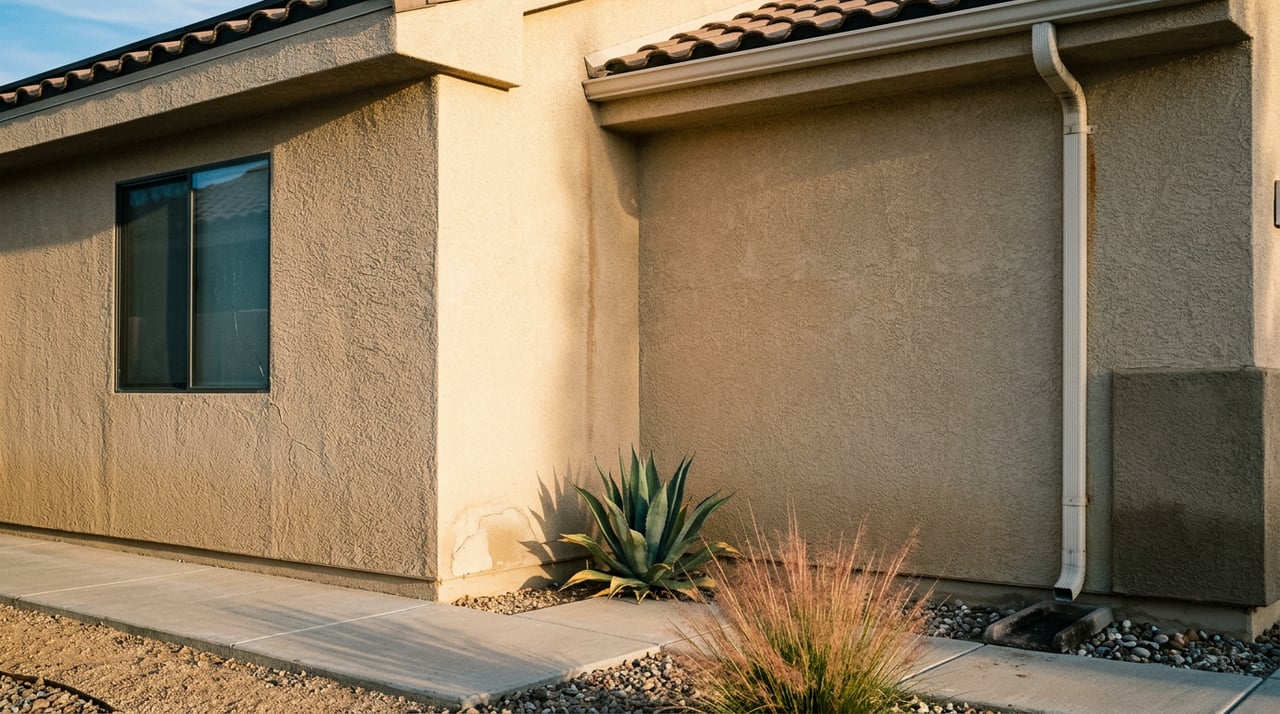
Henderson summers regularly push past 110 degrees, and that heat does not discriminate by build year. UV exposure degrades roofing and stucco at an accelerated pace across the entire city, and dry soil conditions create foundation movement that would not happen in a wetter climate. That is true whether the slab was poured in 1989 or 2023.
It is also why even Cadence, one of Henderson's newest large-scale developments, still turns up inspection items on recently finished homes. Installation issues, drainage questions, and early construction-defect findings do not disappear just because the drywall is new. On the new-construction side, this is exactly why a pre-drywall inspection is worth requesting before the walls close up: it catches problems that finished drywall would otherwise hide for years, and the value it captures typically runs past $1,200 in avoided rework. If you are comparing builder inventory, that single walkthrough is one of the cheapest insurance policies in the whole process.
Henderson's building stock spans several distinct eras, and each one has a predictable inspection profile tied to when and where it was built.
| Area / Era | What tends to show up | Why |
|---|---|---|
| Older homes near downtown Henderson and older Green Valley stock, pre-1990s | Outdated electrical panels, galvanized plumbing, HVAC already past its useful life, cast-iron sewer lines that warrant a scope | These systems were installed before current materials and code standards, and cast-iron lines are prone to root intrusion and corrosion over decades |
| Anthem and Anthem Country Club, mostly built 1998 to 2008 | HVAC systems approaching or at replacement age, stucco showing UV wear | Systems from this era are now 18 to 28 years old, which lands squarely in Henderson's shortened HVAC replacement window |
| MacDonald Ranch and Seven Hills, hillside custom and semi-custom construction | Grading and drainage questions, foundation movement checked against crack width | Hillside lots in the eastern foothills carry different soil and drainage dynamics than flat-lot communities |
| Cadence, newer large-scale development | Installation and workmanship items despite recent construction | Even new builds carry early construction-defect risk that only surfaces once a system has run through a full desert summer |
Read this table before your inspector shows up, not after. It tells you which line items to expect, which ones to budget for, and which ones should trigger a harder look rather than a shrug.
Four findings account for most of the real negotiating room in a Henderson resale transaction, and none of them appear on a generic, one-size-fits-all national inspection checklist:
Here is the question worth asking before you even hire an inspector: does this person carry a moisture meter. Without one, a generalist misses 60 to 70 percent of behind-stucco rot, because that kind of damage does not show on the surface until it is expensive. This is not a preference. It is the single equipment question that determines whether your report catches the stucco issue or lets it hide until you own it.
Henderson homes sold in the three months ending May 2026 spent an average of 57 days on the market, up from 48 days over the same stretch a year earlier. Over that same window, the median sale price came in near $490,000, down slightly from the year before. Neither number is dramatic on its own, but together they describe a market moving slower than it was twelve months ago, and a seller with a pending stucco credit request has less incentive to say no and relist than they did when the average listing was moving nine days faster.
That is the practical shift buyers should walk into an inspection period understanding. A $4,500 stucco credit or a $6,000 slab-leak repair request is not a deal-breaker for most sellers in this market. It is a five-figure number weighed against another 57 days of carrying costs and the risk of losing the buyer they already have.
If you are buying, use the era table above before your offer is even written. Know which failure mode belongs to your target community, price it into your offer strategy, and treat the inspection period as confirmation rather than a surprise.
If you are selling, get ahead of your own home's likely finding before you list. A $300 slab leak check or a moisture reading behind the stucco costs far less than discovering the same issue mid-escrow, when a buyer's inspector finds it first and you are negotiating from behind instead of pricing it into the listing from day one.
It is not a legal requirement, but it is treated as standard practice for homes from that era because cast-iron lines are prone to root intrusion and corrosion over time. Repairs run $4,800 to $18,000 when problems turn up, which makes the scope itself, typically a small fraction of that, one of the better-value line items you can request during the inspection period.
On hillside lots in communities like Seven Hills or MacDonald Ranch, cracking that exceeds 0.25 inches generally calls for a structural engineer's opinion rather than a general contractor's estimate. Anything smaller is usually cosmetic settling that comes with the territory of foothill construction.
Yes. Even a recently completed home in a development like Cadence can carry installation or workmanship issues that only surface once the property has been through a full desert summer. New does not mean nothing to find, it means a different list of things to look for.
Every Henderson community carries its own version of this list, and knowing yours before you write an offer or sign a listing agreement changes how the negotiation goes. If you want to walk through what your specific neighborhood and build era are likely to surface, and how to price that into your next move, Lisa Vaughn is ready to talk it through. Let's Connect.
Stay up to date on the latest real estate trends.
I am committed to guiding you every step of the way—whether you're buying a home, selling a property, or securing a mortgage. Whatever your needs, I've got you covered.
Lisa Vaughn
2225 Village Walk Dr Ste 260 Henderson NV 89052