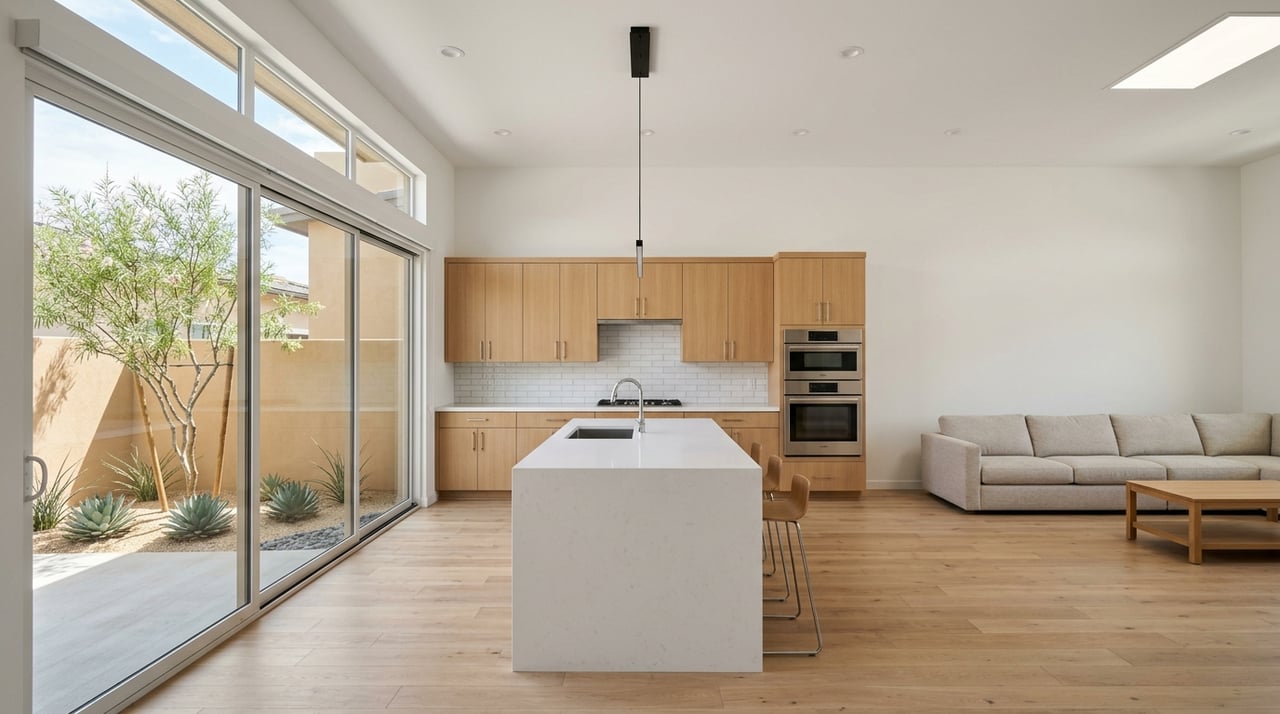
Las Vegas New Construction Guide for Homebuyers
April 2, 2026
April 2, 2026
Buying a brand-new home in Las Vegas can feel exciting and straightforward, especially when the model home looks polished and the sales office makes the process seem simple. But new construction comes with its own set of deadlines, disclosures, and local rules that can affect your budget, timeline, and peace of mind. If you want to buy with more confidence, this checklist will help you focus on what matters most before you sign, during construction, and right before closing. Let’s dive in.
Before you fall in love with a floor plan, confirm that the builder is properly licensed. The Nevada State Contractors Board states that it is unlawful to act as a contractor or submit a bid in Nevada without an active license unless an exemption applies. That makes license verification one of the first smart steps in your due diligence.
You should also ask who is responsible for key parts of the build and keep a record of names, dates, and what was discussed. New construction involves many moving parts, and clear documentation helps you stay organized if questions come up later.
A model home can help you picture finishes and layout, but it is not the same as the lot you are buying. You should walk the actual homesite and confirm the floor plan, orientation, driveway placement, side yard width, and any lot premium in writing.
This matters even more because Nevada requires a separate written disclosure to the initial purchaser, before signing a sales agreement or opening escrow, of the zoning classifications and master-plan land-use designations for adjoining parcels under NRS Chapter 113. In practical terms, that means you should pay attention not just to your lot, but also to what surrounds it and what may be planned nearby.
You do not want surprises after move-in. Review the disclosure for neighboring zoning and land-use designations so you have a better understanding of future development around the property.
This is one area where a careful, process-driven approach matters. If anything about the lot, views, setbacks, or adjacent uses is important to you, ask for it in writing before you commit.
In many Las Vegas Valley new-home communities, the homeowners association will shape part of your monthly cost and some of the rules tied to the property. Nevada’s common-interest community laws explain that CC&Rs become part of the title and can restrict how the property is used.
That means the HOA package deserves the same attention you give the purchase contract. Review the declaration, bylaws, rules, regulations, estimated unit count, budget details, reserves, and other cost-related information included in the public offering statement.
In a new development, the association is often controlled by the developer until a certain number of units have sold. Under NRS Chapter 116, that can affect how quickly owners gain influence over rules, budgets, and amenities.
If that matters to you, ask where the community is in that process. It is a simple question, but it can give you better context for how the neighborhood is being managed today.
In Las Vegas, landscaping is more than a design choice. It can affect water use, maintenance, and your monthly ownership costs.
The Las Vegas Valley Water District mandatory watering schedule requires seasonal watering compliance, allows extra watering for new or reseeded landscapes for up to 14 days once per calendar year, and notes rebates for turf removal and smart irrigation controllers. Because of that, you should ask what the builder installs, what the HOA requires, and what it may cost to maintain over time.
Ask the builder whether the yard plan includes turf, desert landscaping, or smart irrigation features. Also ask whether the landscaping shown in marketing materials is standard, optional, or not included.
These details help you compare communities more accurately. A lower base price may not feel like a bargain if the final landscaping cost is much higher than expected.
Builder contracts can be detailed, and the fine print matters. For Nevada new construction, the seller may need to provide a special disclosure packet to the initial purchaser of certain newly built residential property under NRS 113.
That packet includes copies of specific Nevada statutes, notice of any soil report prepared for the property or subdivision, and copies of those reports on written request. After receiving the reports, the initial purchaser has a 20-day window to rescind, and any waiver of that rescission right must be written and signed.
Nevada also states that disclosure does not create an express or implied warranty. You still have a duty to exercise reasonable care, which is why independent inspections and careful contract review remain important even when the home is brand new.
In short, do not assume new means risk-free. The paperwork and your inspection steps still matter.
Before you hand over a deposit, ask when it is refundable and under what conditions. The Consumer Financial Protection Bureau advises buyers to ask detailed questions about builder deposits and reminds buyers that they are not required to use the builder’s affiliated lender.
You should also keep every addendum, upgrade sheet, and incentive document. The written contract should match the base price, lot premium, selected options, and any credits or promotions you were offered.
If someone says a completion date is likely, a design feature is included, or a lot issue will be addressed, ask for that promise in writing. Builder conversations can move quickly, but your rights and expectations are tied to the signed documents.
This is often where steady guidance adds real value. Careful tracking of deadlines, addenda, and selections can help prevent misunderstandings later.
A new home still needs an inspection. The CFPB recommends scheduling a home inspection as soon as possible, using an inspector who is accountable to you, and attending the inspection if you can.
It is also important to remember that an inspection is not the same as an appraisal. The appraisal helps support the loan process, while the inspection is focused on the property’s condition.
As your closing date gets closer, create a detailed final punch list. If items are unfinished or need correction, document them in writing before closing or before you accept the final walk-through.
That written record can help if repairs need to be addressed through the builder’s warranty process later. A clean paper trail makes follow-up easier.
Do not assume the builder warranty covers everything for years to come. According to the Federal Trade Commission’s guidance on new-home warranties, many builder warranties offer limited coverage, often including one year for workmanship and materials, two years for systems such as HVAC, plumbing, and electrical, and in some cases up to ten years for major structural defects.
The FTC also notes that many warranties require mediation or arbitration and that claims should be made in writing. Before you close, read the warranty terms so you know what is covered, what is excluded, and how to submit a claim.
Even if the home looks finished, do not assume it is ready for occupancy. In Clark County, a Certificate of Occupancy is issued after final building inspection approval and is generally available about three business days later.
If a Temporary Certificate of Occupancy is involved, approval depends on partial inspections and other agency clearances. Clark County also makes clear that a building requiring a Certificate of Occupancy cannot be used or occupied until that certificate is issued.
New construction buyers should plan for a few post-closing details that do not always get much attention during the sales process. In Clark County, property is assessed at 35% of appraised value, tax rates vary by district, and new construction does not qualify for the tax cap in the fiscal year of the change but generally receives the cap starting the following fiscal year, according to the Clark County Assessor.
Clark County also notes that if you buy during the fiscal year, you may need to request a tax bill. On the utility side, if the home is served by the Las Vegas Valley Water District, a new service request may involve a turn-on fee, a deposit, daily service charges, water-use charges, and SNWA charges.
Before move-in, make sure you have:
Buying directly from a builder does not remove the need for careful representation. In many new-build purchases, the biggest value is not flashy. It is comparing communities, reviewing HOA and disclosure packets, tracking rescission and inspection windows, coordinating an independent inspector, and making sure the written contract matches what you were told.
That kind of steady support can make the process feel much clearer from start to finish. If you are comparing new construction in Las Vegas or Henderson and want practical guidance grounded in builder experience, connect with Lisa Vaughn for clear, local support.
Stay up to date on the latest real estate trends.

I am committed to guiding you every step of the way—whether you're buying a home, selling a property, or securing a mortgage. Whatever your needs, I've got you covered.
Lisa Vaughn
2225 Village Walk Dr Ste 260 Henderson NV 89052